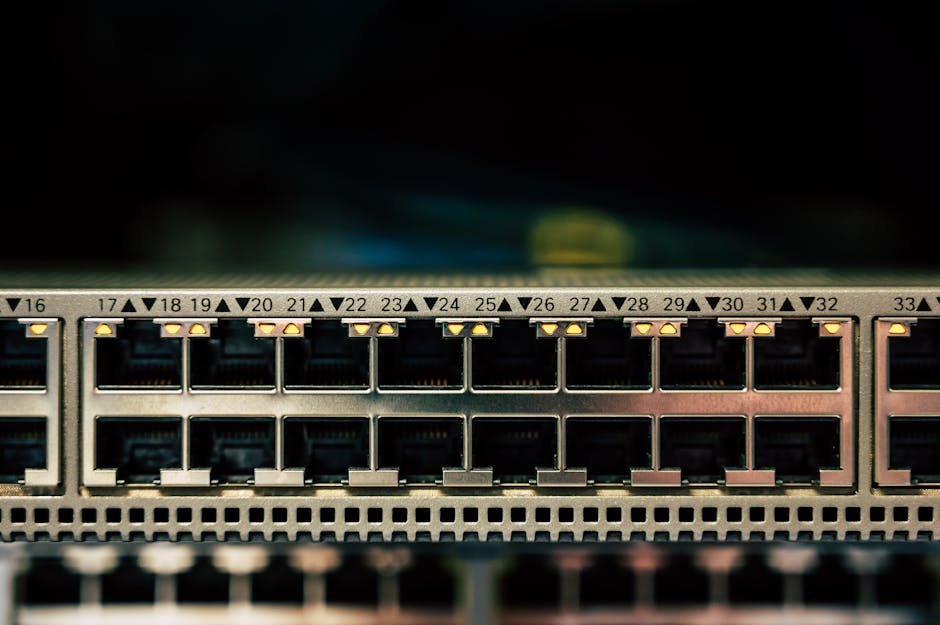
IMDA Type Approval Requirements in Singapore: The 2026 Guide
A technical breakdown of spectrum allocations, local dealer licensing obligations, and product labeling rules mandated by the Infocomm Media Development Authority.
Executive Summary: IMDA Type Approval Requirements
Any wireless or telecommunication terminal equipment entering Singapore must obtain equipment registration (type approval) from the IMDA:
- Dealer Licence Prerequisite: The applicant must be a local Singapore-registered business holding a valid ACRA registration and an active IMDA Telecommunication Dealer's Licence.
- Test Report Standards: Technical documentation must align with IMDA Technical Specifications. CE (RED) and FCC test reports are widely accepted.
- Validity: Certificates are typically valid for **5 years** and are renewable.
- Labeling: Approved hardware must display the official IMDA compliance label physically or digitally (e-label).
Entering the Singapore market with a wireless device without an active regulatory approval is a quick way to watch your commercial cargo get confiscated at Changi Airport or the Port of Singapore. While Singapore's Infocomm Media Development Authority (IMDA) is famous for its efficient, online-only submission portal, their technical reviewers have zero tolerance for incomplete files or out-of-spec frequency bands. The paperwork usually wins, so hardware teams must build a flawless regulatory foundation by understanding the exact IMDA Type Approval requirements before scheduling shipments. Here is the technical breakdown of Singapore's spectrum allocations, dealer licenses, and labeling mandates for 2026.
[Switches to serious face] Let us examine the core technical specifications, local representation rules, and testing boundaries required to achieve IMDA compliance.
1. Technical Standards and Frequency Allocations
IMDA Type Approval requires that your wireless equipment operates within the frequency ranges and power limits defined in the IMDA Technical Specifications (specifically IMDA TS SRD for short-range devices and IMDA TS LMR for mobile terminals). The regulator generally aligns with European ETSI and FCC specifications, meaning local RF testing is rarely needed. However, you must confirm your hardware aligns with the local spectrum limits.
| Technology | Reference Specification | Allowed Frequencies in Singapore | Key Compliance Parameters |
|---|---|---|---|
| WLAN (Wi-Fi 6E/7) | IMDA TS SRD | 5150–5350 MHz / 5725–5875 MHz / 5925–6425 MHz | The 6 GHz band is limited to 5925–6425 MHz (L-6GHz) with indoor use constraints. |
| Bluetooth & BLE | IMDA TS SRD | 2400–2483.5 MHz | Max output power limited to 100mW EIRP. Accepted directly via CE/FCC reports. |
| Cellular LTE / 5G | IMDA TS RG-MT | n1/n78/n257 (typical 5G bands) | Must support emergency cell broadcast capabilities and meet local SAR limits. |
| IoT (LoRaWAN) | IMDA TS SRD | 920–925 MHz | US 915 MHz band devices must be software-locked to the Singapore 923 MHz channel plan. |
As highlighted above, sub-GHz IoT modules programmed for the North American 902–928 MHz band cannot be imported without configuration changes. You must lock the transmitter firmware to the Singapore-specific 920–925 MHz channels before shipment, or customs audits will flag the device as non-compliant.
2. The Local Applicant Requirement (Dealer Licence)
A common stumbling block for international manufacturers is attempting to submit applications directly. The IMDA GoBusiness portal requires Singpass authentication and holds a strict policy: the applicant must be a local corporate entity registered with the Accounting and Corporate Regulatory Authority (ACRA).
Furthermore, the local applicant must hold an active Telecommunication Dealer's Licence (either a Class Licence or an Individual Licence, depending on whether you are selling SRDs or cellular/network equipment). Without this license active in the applicant's profile, the equipment registration portal remains locked. Engaging a registered local representative or distributor who handles these administrative steps is mandatory.
Internal Link: To understand this business prerequisite in detail, read our dedicated guide on the IMDA Telecommunication Dealer's License in Singapore.
3. Testing and Test Report Acceptance
One of the most efficient aspects of Singapore's regulatory framework is that local physical testing is not mandatory for standard equipment schemes. The IMDA accepts test reports issued by laboratories accredited under a Mutual Recognition Arrangement (MRA) or recognized by ILAC member bodies.
Your technical file must contain full test reports (RF, EMC, and Safety) issued within the last 5 years. Summary sheets, quick-start guides, or simple certificates of conformity are not accepted. The reports must explicitly show testing data for the exact model number and hardware revision that you intend to distribute in Singapore.
4. Mandatory Labeling and Product Marking
Once registration is completed and your certificate is issued (valid for 5 years), the device must be labeled prior to sales. The IMDA prescribes a standard layout format. The label contains two parts: the text identifying the equipment registration and the dealer's license code.
Complies with IMDA Standards
[Dealer Licence Number]
For devices with small form factors where physical printing is impractical, the IMDA allows electronic labeling (e-labeling). The user must be able to view the label inside the device software (e.g., under *Settings -> Regulatory*), and the menu path must be documented in the product user guide. Meticulous execution of these details is the only way to pass local market surveillance audits.
The HertzWeg Perspective: Engineering vs. Regulatory Mindsets
HertzWeg was founded by three close friends—all engineers with extensive hands-on product development and industry experience. During our careers, we saw exceptional wireless products sit in warehouses or face devastating launch delays because traditional compliance agencies operated as simple "paper-pushers" who lacked technical depth and offered zero visibility.
We believe that engineers design products to optimize physical laws—which are logical and permanent. Compliance, however, requires navigating regulatory laws—which are bureaucratic, shifting, and highly localized. We speak both languages. According to industry records, **Singapore IMDA approvals usually require around 6 weeks for completion** when handled via traditional routes. Our in-house technical engineers pre-audit every file before submission to bypass these bottlenecks, ensuring that your approvals are completed predictably and without "black-box" communication delays.
Frequently Asked Questions
Do we need to register receiver-only devices with the IMDA?
No. Pure receiver-only devices (such as GPS receivers, radio receivers, or passive NFC tags) are generally exempt from equipment registration. However, they must still comply with basic electrical safety and EMC limits.
How long does the IMDA Equipment Registration take?
For the ESER and SER schemes, approval is near-instantaneous once submitted. For the GER scheme (complex/high-power telecom), the technical review process typically takes 2 to 4 weeks, though overall end-to-end processing averages around 6 weeks.
What is the validity of an IMDA approval?
IMDA equipment registrations are typically valid for 5 years. They can be renewed for similar periods by filing a renewal application before the expiration date through your local dealer license holder.